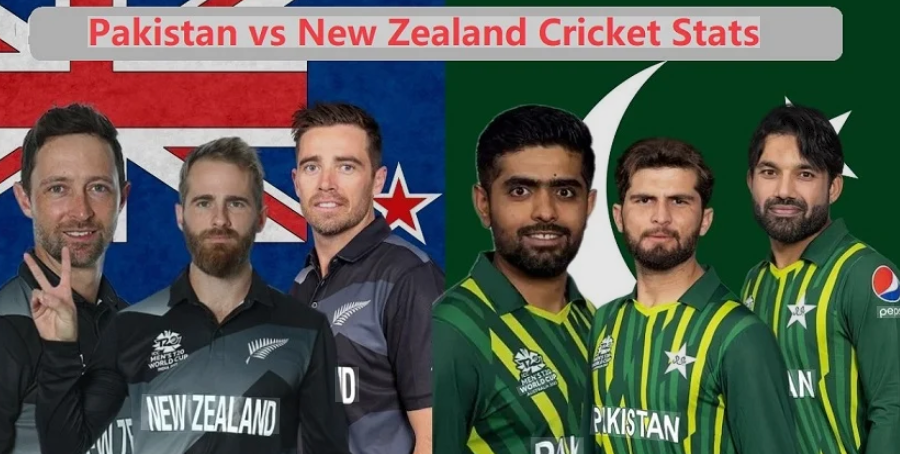
Cricket encounters between these two international sides have always carried a unique blend of intensity, skill, and unpredictability. Over the years, their meetings have produced dramatic shifts in momentum, unforgettable individual performances, and tightly contested finishes that kept fans engaged till the last ball. From early Tests to modern limited-overs clashes, both teams have evolved significantly in style and strategy. Fast bowlers, disciplined batting line-ups, and tactical captaincy have all played defining roles in shaping outcomes. Each match adds a new chapter to their competitive history, reflecting changing eras of cricket and rising global standards that continue to make their contests highly anticipated worldwide.
Latest Matches Table
Date
Format
Venue
Winner
Margin
Player of the Match
February 21, 2026
T20I
Colombo
No Result
Abandoned due to rain
None
April 20, 2025
T20I
Rawalpindi
New Zealand
9 wickets
Mark Chapman
April 18, 2025
T20I
Rawalpindi
New Zealand
4 wickets
Tim Robinson
April 14, 2025
T20I
Lahore
Pakistan
7 wickets
Shaheen Afridi
April 12, 2025
T20I
Lahore
New Zealand
22 runs
Michael Bracewell
April 9, 2025
T20I
Lahore
New Zealand
5 wickets
Ben Sears
Team Statistics Summary Table
Format
Played
Pakistan Won
New Zealand Won
Tied
No Result
Highest Total
Test
62
26
14
0
22
643 for 7
ODI
115
60
51
1
3
369 for 5
T20I
50
24
23
0
3
224 for 7
World Cup ODI
10
8
2
0
0
345 for 4
World Cup T20I
7
5
2
0
0
176 for 4
Champions Trophy
3
2
1
0
0
253 for 5
Individual Batting Records Table
Player
Team
Format
Matches
Runs
Highest Score
Average
Javed Miandad
Pakistan
Test / ODI
54
2919
271
47.85
Kane Williamson
New Zealand
All Formats
58
2761
238
46.79
Inzamam-ul-Haq
Pakistan
Test / ODI
61
2568
329
43.52
Martin Guptill
New Zealand
ODI / T20I
51
2110
132
39.81
Babar Azam
Pakistan
All Formats
49
1984
101
42.21
Mohammad Rizwan
Pakistan
All Formats
43
1642
98
44.37
Individual Bowling Records Table
Player
Team
Format
Matches
Wickets
Best Bowling
Economy
Wasim Akram
Pakistan
Test / ODI
64
128
5 for 22
3.61
Tim Southee
New Zealand
All Formats
56
114
7 for 33
4.23
Waqar Younis
Pakistan
Test / ODI
47
105
7 for 86
3.89
Muttiah Muralitharan
New Zealand
Test / ODI
41
92
6 for 30
4.12
Shahid Afridi
Pakistan
ODI / T20I
68
89
6 for 38
4.45
Shaheen Afridi
Pakistan
All Formats
34
76
5 for 28
4.82
Early Encounters and Rivalry Foundation
The initial phase of international meetings between the two sides set the tone for a competitive cricket relationship that gradually developed intensity over time. In the beginning, both teams were still shaping their identities in world cricket, with contrasting styles that made their encounters unpredictable. One side relied heavily on natural flair, aggressive fast bowling, and spontaneous batting bursts, while the other focused on discipline, structured planning, and consistency in execution. These early matches often swung rapidly due to momentum shifts, with no team maintaining complete dominance for long periods. Fans from both nations began to recognize these contests as more than just fixtures, as emotions started building with each passing game. The early scorecards reflected close finishes, occasional collapses, and standout individual performances that hinted at a deeper rivalry forming beneath the surface. These foundational matches became the blueprint for future encounters, where pressure and pride would always play a central role in shaping outcomes.
Match Type
Venue Condition
Key Feature
Match Outcome
ODI
Balanced pitch
Batting dominance shifts
Closely contested
Test
Swing friendly
Fast bowling impact
Draw/decisive finish
ODI
Subcontinent
Spin influence
Momentum swings
Test
Overseas
Defensive batting
Low scoring battle
Test Match Battles and Long Format Discipline
Long format contests between the two sides showcased patience, technique, and mental endurance at the highest level. These matches were often defined by spells of intense pressure where bowlers tested batters over extended sessions, forcing mistakes through sustained accuracy. One team traditionally excelled in seam and swing conditions, extracting movement from helpful pitches, while the other relied on spin variations and reverse swing to counterattack in later phases of the game. Batting collapses were not uncommon, especially when conditions favored bowlers early in the match. However, there were also moments of resilience where lower-order partnerships changed the direction of entire games. These encounters emphasized the importance of adaptability, as teams had to adjust quickly to shifting pitch behavior over five days. The scorecards from these matches often showed narrow margins or decisive sessions that defined results. Over time, Test matches became a symbol of respect between the two sides, even as competition remained fierce and emotionally charged.
Session Type
Bowling Advantage
Batting Challenge
Match Impact
Morning
Seam movement
Top-order struggle
Early wickets
Afternoon
Pitch flattening
Stabilization phase
Recovery builds
Evening
Reverse swing
Middle-order pressure
Collapse risk
Final day
Spin dominance
Defensive play
Result decider
ODI Transformation and Strategic Growth
As limited overs cricket evolved, encounters between the two sides became more tactical and aggressive. Teams started focusing on strike rates, fielding efficiency, and match tempo rather than just survival or control. One side introduced more aggressive powerplay strategies, aiming to maximize scoring in early overs, while the other emphasized calculated innings building and wicket preservation. Bowling units also adapted, introducing variations such as slower balls, cutters, and yorkers to control scoring in death overs. These tactical shifts made ODI matches more unpredictable and entertaining for fans. Many matches were decided in the final overs, with momentum swinging due to a single over or a breakthrough wicket. The scorecards from this era reflect higher totals, faster scoring patterns, and increased reliance on all-round performances. Fielding standards also improved significantly, leading to run-outs and boundary-saving moments that often changed match outcomes. This phase marked a clear evolution in how both sides approached competitive cricket in the 50-over format.
Phase
Batting Approach
Bowling Strategy
Key Outcome
Powerplay
Aggressive start
Swing attack
Early momentum
Middle overs
Rotation focus
Spin control
Stability
Death overs
High acceleration
Yorkers/cutters
Final push
Chase phase
Calculated risk
Defensive fields
Tight finishes
ICC Events and High Pressure Clashes
Matches played in global tournaments brought a different level of intensity, where pressure often outweighed form or conditions. In these high-stakes encounters, every ball carried significance, and small mistakes had amplified consequences. One side often entered these games with explosive fast bowling attacks designed to disrupt rhythm early, while the other relied on structured batting plans to absorb pressure and counterattack later. These encounters frequently produced unforgettable moments, including last-over finishes, crucial dropped chances, and match-winning partnerships under pressure. The emotional weight of tournament cricket also influenced decision-making, with captains making bold tactical calls in critical situations. Scorecards from these matches often reflect tight margins, with minimal differences in runs or wickets separating victory from defeat. Fans treated these games as defining moments in the rivalry, and players often produced career-defining performances on the biggest stage. Over time, these ICC clashes became the most memorable chapter of their cricketing history.
Tournament Stage
Pressure Level
Key Factor
Outcome Style
Group match
Medium
Early momentum
Competitive finish
Knockout
High
Mental strength
Narrow win/loss
Semi-final
Very high
Tactical execution
Low margin game
Final stage
Extreme
Composure
Historic moments
Rise of Modern Match-Winners
The modern era introduced a new generation of players who changed the dynamics of these encounters through athleticism, innovation, and adaptability. Fast bowlers from one side brought raw pace and aggressive intent, often targeting early breakthroughs, while the opposition developed technically sound batters capable of handling high-quality pace attacks. Power hitters emerged in the middle order, capable of shifting momentum within a few overs. Meanwhile, bowlers on both sides refined their skill sets, incorporating variations and data-driven strategies to outthink batters. Fielding standards also reached new heights, with direct hits and boundary saves becoming common match-changing moments. These developments resulted in more balanced contests where no single team could dominate consistently. Scorecards began to reflect deeper contributions from multiple players rather than reliance on one or two stars. This era marked a shift toward complete team performances, where collective execution became more important than individual brilliance.
Player Role
Skill Focus
Match Impact
Contribution Type
Fast bowlers
Pace and swing
Early wickets
Game control
Middle order
Stability
Recovery innings
Balance building
Finishers
Power hitting
Quick runs
Momentum shift
All-rounders
Dual role
Flexibility
Match balance
T20 Era and Rapid Momentum Shifts
The shortest format introduced a completely different rhythm to these encounters, where momentum could change within a single over. Matches became faster, more aggressive, and heavily dependent on execution under pressure. One side often relied on explosive batting starts, aiming to maximize powerplay overs, while the other focused on controlling runs through disciplined bowling changes. Death overs became the most critical phase, with high-scoring finishes or dramatic collapses frequently deciding outcomes. Captains played a crucial role in managing resources and matchups, often making unconventional decisions to break partnerships or accelerate scoring. Scorecards from this format highlight rapid scoring rates, frequent boundary hits, and tight finishes that kept fans engaged until the final ball. This era also highlighted the importance of mental toughness, as players had to handle instant pressure situations repeatedly. T20 matches added a new layer of excitement to the rivalry, making it one of the most entertaining contests in modern cricket.
Match Phase
Strategy Focus
Risk Level
Key Result
Powerplay
Aggressive hitting
High
Quick runs
Middle overs
Rotation play
Medium
Control phase
Death overs
Maximum acceleration
Very high
Match deciding runs
Final over
Execution precision
Extreme
Win or loss
Home Advantage and Venue Influence
Venue conditions have always played a decisive role in shaping outcomes between the two sides. One team traditionally performs strongly in home conditions where pitches support spin and slower bowlers, allowing them to control the game through structured bowling plans. The other side, however, thrives in conditions that offer seam movement and bounce, making overseas encounters particularly challenging. This contrast creates a natural balance in the rivalry, as both teams dominate in different environments. Weather conditions, pitch preparation, and crowd influence further add complexity to match dynamics. Scorecards often reflect this imbalance, with dominant performances shifting depending on the venue. Over time, both teams have worked to improve adaptability, focusing on building squads capable of performing across all conditions. This evolution has made recent encounters more competitive regardless of location, reducing the historical gap between home and away performances.
Venue Type
Dominant Strength
Challenge Factor
Match Trend
Subcontinent
Spin control
Slow pitches
High scoring
Overseas
Seam bowling
Swing movement
Low scoring
Neutral venue
Balanced conditions
Adaptability
Close contests
Day-night
Ball variation
Visibility changes
Unpredictable
Conclusion
The journey of this rivalry reflects more than just wins and losses, it showcases evolution, resilience, and adaptation across different eras of cricket. Both teams have produced legendary performances, shaped by conditions, pressure, and tactical brilliance. Whether in Tests, ODIs, or T20s, the competition has consistently delivered memorable moments that highlight individual talent and team effort. Scorecards tell only part of the story, while the real essence lies in the fight, emotion, and strategic depth displayed on the field. As both sides continue to develop modern approaches, this rivalry remains a compelling chapter in international cricket history.