Table of Contents
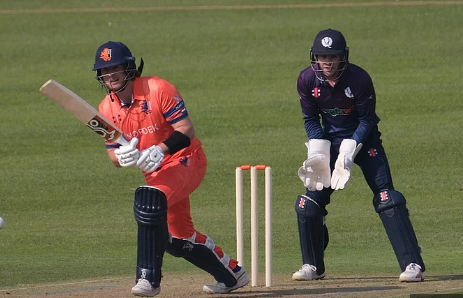
The rivalry between the Scotland National Cricket Team and the Netherlands National Cricket Team has become one of the most competitive battles in associate cricket. Both teams regularly meet in ICC events and qualifiers, producing closely fought matches filled with intensity and determination. Their contests reflect the growth of emerging cricket nations and their ambition to compete at the highest level.
Latest Matches
| Tournament | Venue | Date | Scotland Score | Netherlands Score | Result | Series |
| ICC Men’s T20 World Cup Europe Region Final | The Hague (Sportpark Westvliet) | Jul 8, 2025 | 148/9 (20 overs) | 142/7 (20 overs) | Scotland won by 6 runs | ICC Men’s T20 World Cup Europe Region Final |
| Scotland T20 Tri Series | Glasgow | Jun 18, 2025 | 181/9 (20 overs) | 198/7 (20 overs) | Netherlands won by 17 runs | Scotland T20 Tri Series |
| Scotland T20 Tri Series | Dundee/Forthill | Jun 15, 2025 | 160/8 (20 overs) | 121 (20 overs) | Scotland won by 39 runs | Scotland T20 Tri Series |
| ICC Men’s Cricket World Cup League 2 | Forthill, Dundee | Jun 12, 2025 | 369/6 (50 overs) | 374/6 (49.2 overs) | Netherlands won by 4 wickets | ICC Men’s Cricket World Cup League 2 |
| ICC Men’s Cricket World Cup League 2 | Forthill, Dundee | Jun 06, 2025 | 262/9 (50 overs) | 218 (45 overs) | Scotland won by 44 runs | ICC Men’s Cricket World Cup League 2 |
| ICC Men’s Cricket World Cup League 2 | Sportpark Maarschalkerweerd, Utrecht | May 16, 2025 | 380/9 (50 overs) | 235 (42.1 overs) | Scotland won by 145 runs | ICC Men’s Cricket World Cup League 2 |
| ICC Men’s Cricket World Cup League 2 | VRA Ground, Amstelveen | May 10, 2025 | 263/9 (50 overs) | 282/7 (50 overs) | Netherlands won by 19 runs | ICC Men’s Cricket World Cup League 2 |
| Bilateral T20I | Sportpark Westvliet, The Hague | May 22, 2024 | 158/7 (20 overs) | 87 (14.5 overs) | Scotland won by 71 runs | Netherlands Tri-Nation T20I Series |
| Bilateral T20I | Sportpark Westvliet, The Hague | May 18, 2024 | 126 (18.1 overs) | 167/8 (20 overs) | Netherlands won by 41 runs | Netherlands Tri-Nation T20I Series |
| Bilateral ODI | – | Jul 06, 2023 | 277/9 (50 overs) | 278/6 (50 overs) | Netherlands won by 4 wickets | Bilateral ODI |
| T20 World Cup Qualifier | Dubai International Cricket Stadium | Oct 27, 2019 | 130/8 (20 overs) | 131/6 (17 overs) | Netherlands won by 4 wickets | ICC Men’s T20 World Cup Qualifier |
| Ireland Tri-Nation T20I Series | The Village, Dublin | Sep 19, 2019 | 126/4 (13.2 overs) | 123 (20 overs) | Scotland won by 6 wickets | Ireland Tri-Nation T20I Series |
Head-to-Head Record
| Format | Matches Played | Scotland Won | Netherlands Won | No Result/Tied | Scotland Win % | Netherlands Win % | Notes |
| Overall (ODI + T20I) | ~29-32 (approx.) | 15-18 | 11-14 | 1-2 | ~55-60% | ~40-45% | Scotland stronger in ODIs; close in T20Is |
| ODIs | 14-15 | 8-9 | 5-6 | 1 | ~60% | ~35-40% | Scotland dominant; big wins like 145 runs |
| T20Is | 15-17 | 8 | 7-8 | 0 | ~50-53% | ~47-50% | Nail-biters; recent Scotland edge in qualifiers |
Format-wise Team ComparisonTable
| Category | ODIs (Scotland) | ODIs (Netherlands) | T20Is (Scotland) | T20Is (Netherlands) | Key Insight |
| Matches | 14-15 | 14-15 | 15-17 | 15-17 | Balanced rivalry |
| Wins | 8-9 | 5-6 | 8 | 7-8 | Scotland leads ODIs |
| Highest Team Total | 380+ | 374 | 252? | 198+ | Explosive batting tracks |
| Lowest Team Total | 126? | 87-218 | 87-126 | 103-142 | Collapses happen |
| Avg Runs per Match (approx) | 208-250 | 184-200 | 150-180 | 140-170 | Higher in ODIs |
| Notable Recent Result | 145-run win (2025) | 19-run win (2025) | 6-run thriller (2025) | 17-run win (2025) | Competitive edge |
Top Batting Performers in Rivalry
| Rank | Player | Team | Runs | Key Highlight |
| 1 | SA Edwards | NED | High | Consistent T20 performer |
| 2 | M Levitt | NED | High | Recent impact |
| 3 | CS MacLeod | SCO | High | Long-time stalwart |
| 4 | Max O’Dowd | NED | 158* | Massive 2025 knock |
| 5 | Brandon McMullen | SCO | 101 | All-round hero 2025 |
| 6 | Richie Berrington | SCO | 105 | Captain’s innings |
| 7 | George Munsey | SCO | 80+ / 191? | Record chases/wins |
Top Bowling Performers in Rivalry
| Rank | Player | Team | Wickets | Economy (approx) | Key Highlight |
| 1 | RE van der Merwe | NED | High | Spin control | All-time leading |
| 2 | PA van Meekeren | NED | High | Pace threat | Consistent threat |
| 3 | Mudassar Bukhari | NED | High | Veteran swing | Early rivalry star |
| 4 | Mark Watt | SCO | High | Economical left-arm | All-round impact |
| 5 | Brandon McMullen | SCO | 4+ | 2025 hero | Match-winner |
| 6 | Safyaan Sharif | SCO | 3+ | Scotland’s leading all-time | Clutch performer |
| 7 | Chris Greaves | SCO | 3/26 | Leg-spin magic | Recent thriller |
ODI Cricket Battles and Tactical Strengths
ODI cricket has been the most consistent format for clashes between Scotland and the Netherlands. These matches are often part of ICC qualifiers and league competitions, making them highly significant. Both teams rely on structured gameplay, where building partnerships and controlling the middle overs are crucial.
Scotland has developed a reputation for steady batting and disciplined bowling, often focusing on maintaining balance throughout the innings. The Netherlands, meanwhile, tends to rely on experienced players who can anchor innings while accelerating when required. Their bowling unit uses variations effectively, especially in slower conditions.
These encounters are typically competitive, with neither side allowing the other to dominate easily. Tactical decisions such as field placements and bowling changes often determine the outcome. The ODI format continues to highlight the strategic depth and adaptability of both teams.
| ODI Factor | Scotland | Netherlands | Impact |
| Batting Approach | Stable | Controlled | Balanced scoring |
| Bowling Style | Disciplined | Tactical | Pressure building |
| Match Strategy | Structured | Flexible | Close contests |
| Game Control | Middle overs focus | Late acceleration | Key phases |
T20I Encounters and Modern Playing Style
The T20I format has brought a fresh and aggressive dimension to this rivalry. Both teams have adapted to modern cricket by focusing on power hitting, quick scoring, and innovative bowling strategies. The shorter format demands precision and fearless gameplay.
Scotland often relies on aggressive top-order batting to set the tone early. Their ability to score quickly in the powerplay gives them an advantage. On the other hand, the Netherlands emphasizes explosive middle-order performances and smart finishing.
Bowling in T20Is plays a decisive role, especially during the death overs. Both teams use variations like slower balls and yorkers to restrict scoring. Fielding has also become a key factor, with sharp reflexes and athleticism influencing match outcomes.
This format ensures thrilling encounters, with momentum shifting rapidly and matches often going down to the final overs.
| T20I Aspect | Scotland | Netherlands | Result |
| Batting | Aggressive start | Strong finish | High scoring |
| Bowling | Smart variations | Tactical execution | Tight games |
| Fielding | Improving | Athletic | Crucial impact |
| Match Pace | Fast | Dynamic | Unpredictable |
ICC Tournaments and Qualification Pressure
ICC tournaments have played a crucial role in strengthening the rivalry between these two teams. Scotland and the Netherlands frequently face each other in qualification events for major global tournaments, where every match is critical.
These games carry immense pressure, as qualification opportunities are limited. Both teams approach such matches with well-planned strategies and a strong focus on execution. The Netherlands has often been consistent in ICC events, while Scotland has shown steady improvement and resilience.
The intensity of these matches is reflected in the quality of cricket displayed. Players are required to perform under pressure, making every run and wicket valuable. These encounters not only decide tournament progression but also influence team rankings and confidence levels.
| ICC Factor | Scotland | Netherlands | Outcome |
| Pressure Handling | Improving | Strong | Competitive |
| Tournament Impact | Significant | Significant | High stakes |
| Consistency | Growing | Reliable | Balanced |
| Performance Level | Rising | Stable | Intense games |
Bowling Strength and Match Control
Bowling has been a defining factor in matches between Scotland and the Netherlands. Both teams emphasize disciplined bowling to restrict opposition scoring and create pressure. This approach often leads to low or moderate-scoring games.
Scotland’s bowling unit focuses on accuracy and consistency, aiming to build pressure through dot balls. The Netherlands, on the other hand, uses a mix of pace and spin, adapting to pitch conditions effectively. Their bowlers are known for executing plans in crucial moments.
Control during the middle overs is especially important, as it prevents the batting side from accelerating. Both teams have developed strategies to maintain tight lines and lengths, forcing mistakes from batters.
This emphasis on bowling discipline highlights the tactical nature of their rivalry, where controlling the game often proves more important than aggressive play.
| Bowling Aspect | Scotland | Netherlands | Impact |
| Accuracy | High | High | Pressure |
| Variations | Moderate | Strong | Wickets |
| Middle Overs | Controlled | Strategic | Game control |
| Adaptability | Good | Very Good | Key advantage |
Batting Depth and Run-Scoring Patterns
Batting performance plays a crucial role in determining the outcome of matches between these teams. Both Scotland and the Netherlands have developed lineups capable of adapting to different match situations.
Scotland often focuses on building partnerships and maintaining a steady scoring rate. Their approach is based on minimizing risks while ensuring consistency. The Netherlands, in contrast, tends to adopt a slightly more aggressive style, especially during the latter stages of an innings.
Run-scoring patterns vary depending on conditions, but both teams aim to capitalize on key phases such as powerplays and death overs. The ability to accelerate when required is a critical factor in limited-overs cricket.
This balance between stability and aggression makes their batting contests engaging, with each team trying to outmaneuver the other strategically.
| Batting Factor | Scotland | Netherlands | Result |
| Approach | Steady | Aggressive | Balanced |
| Partnerships | Strong | Effective | Stability |
| Acceleration | Controlled | Explosive | Key phase |
| Adaptability | Good | Very Good | Competitive edge |
Trends and Statistical Insights
The rivalry between Scotland and the Netherlands reflects the overall growth of associate cricket. Both teams have improved significantly over the years, narrowing performance gaps and increasing competitiveness.
One key trend is the shift towards aggressive cricket, especially in T20 formats. Both teams now focus on higher scoring rates and innovative strategies. Another noticeable trend is their ability to perform consistently in ICC tournaments, highlighting their development as strong contenders.
Neutral venues often provide balanced conditions, allowing both teams to showcase their skills equally. The increasing frequency of matches has also led to better understanding and preparation against each other.
These trends demonstrate how both teams are evolving and contributing to the global expansion of cricket, making their rivalry more exciting with each encounter.
| Trend | Observation | Impact |
| Playing Style | More aggressive | Entertaining |
| Performance | Improving | Balanced rivalry |
| Conditions | Neutral advantage | Fair contests |
| Growth | Rapid | Strong future |
Conclusion
The Scotland National Cricket Team and the Netherlands National Cricket Team share a rivalry that highlights the true spirit of competitive cricket among emerging nations. With tactical battles, evolving playing styles, and consistent performances in ICC tournaments, both teams continue to raise their standards. Their matches remain unpredictable and engaging, proving that associate cricket is growing stronger and more exciting on the global stage.
